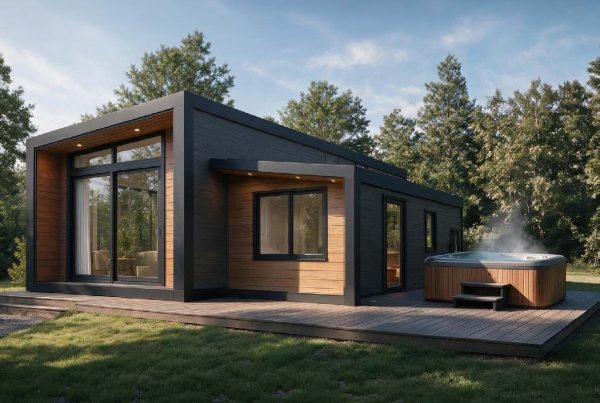
A practical guide to choosing glamping pods, planning your site and developing a new income stream
For farmers and rural landowners across the UK, glamping offers an opportunity to explore a new source of income while making use of suitable land. A field with attractive views, an underused corner of an estate or land close to an existing farm business could potentially support a carefully planned tourism venture.
But a successful glamping development involves more than choosing a cabin and listing it online. Landowners need to assess the site’s potential, understand planning requirements, select suitable accommodation and budget for everything needed to welcome guests.
The right approach starts with the land itself. Is there demand for rural accommodation in the area? Can the proposed site be accessed and serviced? What type of guests could it attract? And what investment would be required before the first booking?
At The British Pod Company, we manufacture premium glamping pods and holiday cabins in Lancashire and support customers with planning-related services, site infrastructure, delivery and installation. This guide explains the key decisions involved in developing glamping accommodation as part of a UK farm diversification strategy.
1. Why consider glamping as a farm diversification opportunity?
Farm diversification means developing additional activities alongside a farm’s existing agricultural operations. These might include tourism, holiday accommodation, farm shops, leisure activities or other businesses that make use of existing assets.
Glamping can be attractive to some landowners because it offers a way to explore the tourism potential of a rural location without necessarily undertaking a large conventional building project. Self-contained pods can provide sleeping accommodation, a kitchenette and a private bathroom within a defined footprint.
Depending on the site and business model, potential benefits may include:
- An additional income stream: Guest bookings can generate revenue alongside existing agricultural or property activities.
- Making use of suitable land: Areas that are not central to day-to-day farming operations may warrant investigation for tourism use, subject to planning and environmental considerations.
- A distinctive guest experience: Countryside views, walking routes, wildlife, local attractions and rural tranquillity can help shape an attractive holiday proposition.
- A phased approach: Some landowners may prefer to investigate a small development before considering additional accommodation.
- Complementary rural businesses: Glamping could sit alongside other visitor activities, local food experiences or existing holiday accommodation where the location and operating arrangements make sense.
None of these benefits is automatic. A rural location alone does not guarantee bookings, and a glamping business requires investment, management and ongoing maintenance. The first step is to establish whether your land and the local market offer a credible opportunity.
2. Is your land suitable for glamping pods?
Before choosing a model or requesting a detailed quotation, assess the site. The most attractive part of a farm is not always the easiest or most commercially suitable place to develop accommodation.
A useful early assessment should consider the following factors.
Location and visitor demand
Think about who might want to stay in your area and why. Potential guests might include couples seeking a countryside break, families exploring nearby attractions, walkers and cyclists, or visitors attending local events.
Research competing accommodation, typical nightly rates, seasonal patterns and the facilities guests expect. Consider how easily visitors can reach the site and whether there are enough activities, attractions or reasons to stay overnight.
A location with attractive scenery may be an advantage, but the business case should be supported by evidence of likely demand rather than scenery alone.
Access and delivery
A pod must be transported to the site and positioned safely. Assess the access route from the public road, gate widths, turning areas, overhead obstructions, ground conditions and the space available for installation equipment.
Guest access matters too. Visitors need a practical route from parking to their accommodation, including in wet weather and during darker winter evenings.
Ground conditions and topography
Flat, accessible land may make site preparation more straightforward, but sloping or uneven ground does not automatically rule out a project.
The foundation system must be appropriate for the soil, terrain and building. Some sites may be suitable for conventional foundations, while others could benefit from investigating an alternative such as steel piling.
Ground conditions should be assessed before you commit to a particular location or foundation design.
Utilities and drainage
A self-contained pod may require electricity, water, hot water and suitable wastewater arrangements. Establish where existing services are located, whether they have sufficient capacity and what work would be needed to connect them.
Wastewater disposal, surface-water drainage and any environmental constraints should be considered early. These can materially affect both the feasibility and the cost of a development.
Privacy and landscape
The position of each pod influences the guest experience. Consider views, privacy, noise, lighting, the relationship between units and the wider landscape.
If you are considering several pods, the layout should allow guests to enjoy their stay without feeling overlooked, while providing practical access for cleaning and maintenance.
Planning and environmental constraints
Check whether the site is affected by landscape designations, flood risk, protected habitats, heritage constraints, access restrictions or other considerations that could influence development.
These factors do not all prevent a glamping project, but they may affect the design, scale, location or supporting information needed for a proposal.
A site appraisal can help identify potential obstacles before you commit to substantial expenditure.
3. Choosing the right glamping pod for your farm
The best glamping pod is not necessarily the largest or the most luxurious. It is the model that fits your intended guests, available land, budget and overall business plan.
A well-designed, self-contained pod can offer a more independent stay than a basic camping pitch. Facilities such as a private bathroom, kitchenette, comfortable sleeping arrangements, insulation and heating may help shape the experience you can offer.
When comparing models, look beyond the initial purchase price. Consider the footprint, internal layout, sleeping capacity, standard specification, optional extras, maintenance requirements and suitability for the level of use you anticipate.
The Apex: a flexible option for premium glamping
The Apex glamping pod is a useful starting point for landowners exploring self-contained holiday accommodation. The range includes a mezzanine layout and fitted kitchen and bathroom facilities, with different configurations available.
Its defined footprint can help when planning the position of a pod within a site, while the mezzanine arrangement makes use of vertical space for sleeping accommodation.
It may be worth exploring if your plans centre on a premium countryside retreat with a carefully considered internal layout.
The Incline: contemporary design and a sense of escape
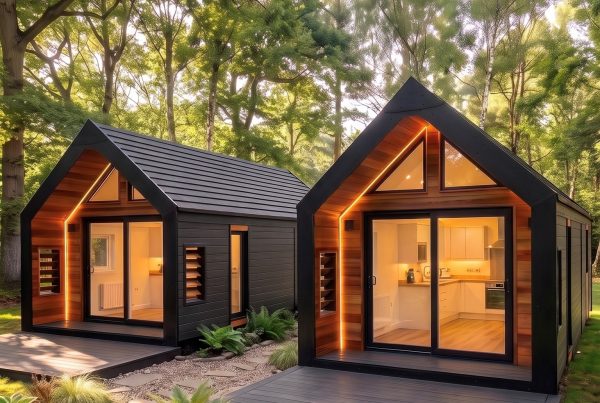
The Incline is another option for landowners who want a design-led accommodation offering. Its contemporary appearance and open-plan feel may suit a site where the relationship between the interior and the surrounding landscape is part of the guest experience.
The range is available in lengths from 8 to 10 metres. Review the current specification and layout options to determine whether it fits your target market and site.
The Big British: space for families and groups
The Big British is worth considering where the intended guests need more space. At 3.8 metres wide and available in lengths from 7 to 9 metres, it is designed to accommodate larger groups, with a published capacity of up to six guests depending on the configuration.
A family-oriented unit may appeal to landowners targeting school holidays, multi-generational breaks or groups visiting rural attractions. The commercial case will depend on local demand, pricing and the costs associated with providing and maintaining the accommodation.
The Tunnel: a compact, self-contained option
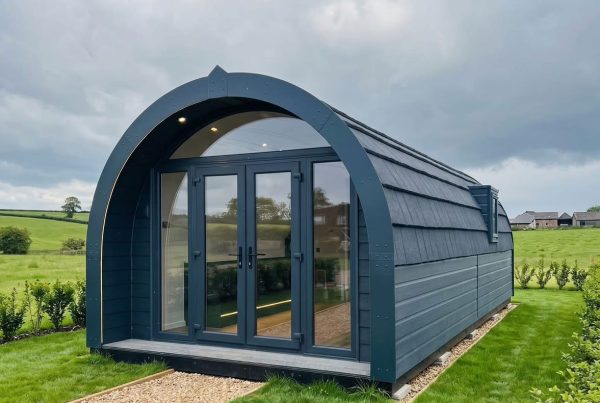
The Tunnel is a more compact option, with a width of 3.4 metres and lengths from 6 to 7 metres. It is advertised as accommodating up to four guests.
It may be worth comparing if efficient use of space is important or if you want to explore a different price point and guest proposition from a larger unit.
What should you compare before making a decision?
For each model, ask the manufacturer to confirm:
- The exact dimensions and internal layout.
- The number of guests the selected configuration can comfortably accommodate.
- Which kitchen, bathroom, heating and electrical features are included.
- The insulation and glazing specification.
- Available external finishes and optional upgrades.
- Delivery, installation and foundation requirements.
- The applicable guarantee and maintenance guidance.
- Which elements of the site preparation and utility connections are excluded from the quotation.
The complete specification matters more than the headline description. Confirming the details in writing makes it easier to compare options and build a realistic project budget.
You can compare the full range of glamping pods or explore the Pod Builder to investigate available configurations.
4. Planning permission for farm glamping pods in the UK
Planning permission is one of the most important issues to investigate before developing glamping accommodation on agricultural land.
Do not assume that a pod is exempt from planning permission simply because it is prefabricated, movable or installed on a removable foundation. The requirements depend on the proposed use, the nature and permanence of the development, the site and the applicable planning rules.
Commercial holiday accommodation on agricultural land can require planning permission, even where the structure itself appears relatively small or temporary. The planning authority may consider the use of the land as well as the accommodation units and supporting infrastructure.
Planning systems also differ across England, Wales, Scotland and Northern Ireland. The process and relevant policies must be considered for the actual location of your project.
What might the planning authority consider?
Depending on the proposal, relevant issues may include:
- The principle and scale of tourism development on the site.
- The number, size, appearance and positioning of the pods.
- Access arrangements, parking and traffic.
- Water supply, wastewater disposal and drainage.
- Landscape and visual impact.
- Effects on neighbours, noise and lighting.
- Flood risk, ecology, heritage and other site constraints.
- Supporting facilities, landscaping and wider site infrastructure.
The relevant considerations will depend on the local authority and the details of the proposed development.
Why investigate planning before ordering pods?
It can be tempting to choose a model and begin planning the layout before checking the planning position. However, the proposed development may need to be adapted to reflect local policies, site constraints or the information required to support an application.
Investigating planning early can help you understand whether the project is worth progressing, what information may be needed and whether changes to the proposed layout or scale should be considered.
Do not undertake development or commit to significant site works on the assumption that approval will be granted. Obtain the appropriate advice and permissions before proceeding.
5. How The British Pod Company can help with planning
For landowners who have not developed tourism accommodation before, navigating the planning process can feel like a substantial task.
The British Pod Company offers planning-related services for glamping developments. Its published service includes:
- Site appraisals and visits.
- Feasibility studies to explore development options.
- A drawing pack, including existing and proposed site plans.
- Preparation of a planning statement.
- Coordination with third-party surveyors and contractors.
- Liaison with the relevant Local Planning Authority.
- Preparation and submission of planning applications, as agreed for the project.
The aim is to help customers understand their site’s development potential and prepare the information needed to progress a proposal.
The scope of support required will vary. Some projects may need additional surveys, specialist reports or professional services, depending on the location and the nature of the development.
Planning approval cannot be guaranteed. The planning authority makes its own decision based on the proposal and relevant requirements.
If you are considering glamping on your farm or rural estate, explore The British Pod Company’s planning permission service and planning permission services to understand the support available.
6. Site preparation, foundations and infrastructure
A glamping pod is only one part of the investment. The land must be ready for delivery, installation and guest use.
Some sites may already have suitable access and nearby services. Others may require substantial groundwork or infrastructure before accommodation can be installed.
Foundations: concrete or steel piling?
The appropriate foundation depends on the ground conditions, the pod and the installation requirements.
A conventional concrete base may be suitable for many sites. On other sites, particularly where slopes, uneven ground or excavation requirements present challenges, it may be worth assessing an alternative foundation approach.
The British Pod Company offers a steel piling solution designed as an alternative to traditional concrete foundations in suitable circumstances.
Steel piling may help reduce the need for extensive excavation or a full concrete base, but it is not suitable for every ground condition. Rocky ground, for example, may require a different solution. The proposed foundation must be assessed for the site and the structure.
Choosing a piling system does not remove the need to consider planning permission or other approvals. The suitability of the foundation and the planning position are separate questions.
Utilities and services
Before finalising your layout, establish how the pods will be supplied with electricity and water, how hot water will be provided and how wastewater will be managed.
For multiple units, it is important to understand the capacity and cost of shared infrastructure. The distance from existing services and the work needed to connect each unit can influence the overall project budget.
Access, parking and landscaping
Think about how guests will arrive, where they will park and how they will reach their accommodation. The layout should also consider emergency access where relevant, servicing, cleaning and maintenance.
Landscaping can help integrate the pods into the site, provide privacy and shape the guest experience. However, planting, paths, decking, lighting and other finishing work should be included in the project budget rather than treated as an afterthought.
Delivery and installation
Confirm that the access route is suitable for transporting the selected pod and that the installation area can be reached safely. Check what is included in the manufacturer’s quotation, including delivery, positioning, foundation work and connections.
The British Pod Company can discuss its product range and the services available for your proposed project. Agree the scope of work and responsibilities before ordering.
7. How much does farm glamping accommodation cost?
The total investment depends on the pod you choose and the work needed to prepare the land. A meaningful budget should include more than the accommodation itself.
Potential costs include:
- The pod and selected specification.
- Delivery and installation.
- Site preparation and foundations.
- Access improvements and parking.
- Electricity, water and wastewater connections.
- Planning fees, professional advice and any required surveys.
- Landscaping, paths, decking and outdoor facilities.
- Furniture, equipment and guest amenities not included in the pod.
- Insurance, cleaning, laundry, utilities, maintenance and repairs.
- Marketing, booking platform fees and business administration.
- Finance costs, tax and the value of your own time, where applicable.
The costs can vary substantially from one site to another. A quotation should distinguish the accommodation price from the additional work required to make the site operational.
An illustrative investment example
The British Pod Company has published an example based on an Apex Mezz glamping pod. The figures below illustrate how an initial investment and potential booking revenue might be modelled; they should not be treated as a current quotation or a forecast.
| Illustrative item | Example amount |
|---|---|
| Fitted and delivered Apex Mezz pod | £47,500 |
| Estimated site preparation and siting | £7,500 |
| Indicative initial investment | £55,000 |
The site preparation allowance is an estimate. The actual figure will depend on access, ground conditions, foundations, utilities and the work required at the chosen location.
Before using these figures in a business plan, request an up-to-date quotation and check which elements are included and excluded.
8. Assessing the potential income from a glamping pod
The income potential of a glamping business depends on the nightly rate, occupancy, seasonality, local competition and the effectiveness of its management and marketing.
An attractive pod is not enough on its own. Landowners need to understand how many nights they might realistically sell, what guests are prepared to pay and what it will cost to operate the accommodation.
For illustration, consider the following scenario:
| Assumption | Illustrative figure |
|---|---|
| Average nightly rate | £150 |
| Annual occupancy | 60% |
| Occupied nights per year | Approximately 219 |
| Gross annual booking revenue | £32,850 |
The calculation is 219 occupied nights multiplied by £150 per night, giving £32,850 in gross booking revenue.
This is an example, not a prediction. A site may achieve a lower or higher nightly rate and occupancy level, depending on its location, target market, seasonality, facilities, reviews and competition.
Calculate the costs as carefully as the revenue
Gross booking revenue is not the same as profit. Operating expenses may include:
- Cleaning and laundry between stays.
- Electricity, water and other utilities.
- Booking platform commissions and payment processing.
- Insurance and ongoing maintenance.
- Replacement of furniture, equipment and consumables.
- Marketing and website costs.
- Management or staffing.
- Finance costs and tax.
There may also be significant expenditure that is not part of routine operating costs, such as major repairs, replacement of the pod or improvements to the site.
A sound financial model should include a realistic estimate of both initial capital expenditure and ongoing costs. It should also account for the time required to manage bookings, guest communication, cleaning and maintenance.
How quickly could the investment be recovered?
A simple payback calculation divides the initial investment by the annual cash surplus. However, the result is only meaningful if the underlying figures are realistic and the costs included are clearly defined.
For example, a model that excludes finance, tax, marketing, major repairs or the owner’s time may overstate the amount available to recover the initial investment.
Rather than relying on a single optimistic forecast, build conservative, expected and stronger-performance scenarios. Test how the project performs if the nightly rate is lower than anticipated, occupancy falls during the winter or operating costs increase.
The goal is to understand the risks as well as the potential reward before committing capital.
For more detailed context, read Farm Diversification with Glamping Cabins: Costs, Planning and Potential Returns.
9. Should you start with one pod or develop a larger site?
The right scale depends on the land, budget, planning position and business objectives.
Starting with one pod
A single unit may provide a way to investigate demand and understand the practicalities of operating holiday accommodation. It can also be appropriate where the site or available capital is limited.
However, a one-pod project still requires suitable planning, infrastructure and management. Shared costs such as access, utility connections and professional advice can represent a significant proportion of a small development’s total investment.
Developing several pods
A larger development may make more use of shared infrastructure and allow a broader accommodation offering. It may also require a higher initial investment, more complex planning work and greater operational capacity.
The layout must consider guest privacy, access, drainage, servicing and the effect of the development on the surrounding landscape.
Do not assume that adding more pods will automatically improve profitability. Additional units increase the potential number of bookings, but also increase capital costs, maintenance and management requirements.
Planning for future expansion
If you want to begin with one or two units and expand later, consider the long-term site layout from the start.
Where practical, assess how future units might affect access, utilities, drainage, parking, privacy and landscaping. Discuss the proposed phasing with your planning adviser and the local authority where appropriate, rather than assuming that a later expansion will be approved automatically.
10. Managing and marketing your glamping business
Once the site is established, the focus shifts to attracting guests and delivering a consistent experience.
Before launch, decide who will manage bookings, respond to enquiries, prepare the accommodation between stays, handle maintenance and deal with guest issues.
You should also plan how potential customers will discover the property. Depending on the business model, this may involve an independent website, booking platforms, social media, local tourism partnerships and targeted advertising.
High-quality photography, accurate descriptions, clear facilities information and straightforward booking arrangements can all help communicate the experience you offer.
Consider the seasonality of your location. Nearby walking routes, attractions, events and local businesses may influence demand at different times of the year. Pricing and marketing should reflect realistic demand rather than assuming the same occupancy throughout the calendar.
If you want to operate the accommodation alongside a busy farming business, be honest about the time and resources available. A management arrangement or suitable automation may help with some tasks, but it does not remove the need for oversight, cleaning, maintenance and guest support.
11. A practical checklist before investing in farm glamping pods
Before committing to a development, work through these key questions.
Land and demand
- Have you assessed local accommodation demand and competing businesses?
- Is the proposed location attractive and accessible to your target guests?
- Is there enough space for the pods, parking, paths and supporting infrastructure?
Planning and professional advice
- Have you discussed the proposed use with the relevant local planning authority?
- Have you identified any landscape, ecological, access or other site constraints?
- Do you understand which surveys, documents or other consents may be required?
Accommodation and installation
- Have you compared the pod models and confirmed the complete specification?
- Have delivery access, foundations, utilities and wastewater arrangements been assessed?
- Do you have a clear written quotation covering the accommodation and agreed installation work?
Financial viability
- Have you budgeted for the full setup cost, not just the pod?
- Are your nightly rate and occupancy assumptions supported by local evidence?
- Have you included operating costs, maintenance, booking fees, finance and tax where applicable?
Have you tested a more cautious scenario with lower occupancy or higher costs?
- Ongoing operations
- Who will manage bookings, cleaning, maintenance and guest communication?
- How will the accommodation be marketed?
Can the business operate alongside the existing farm or estate activities?
If several answers remain uncertain, it may be worth completing a feasibility assessment before proceeding.
12. How The British Pod Company can support your project
Developing glamping accommodation brings together several decisions: choosing the right pod, understanding planning requirements, preparing the site and coordinating delivery and installation.
The British Pod Company manufactures premium glamping pods and holiday cabins in Lancashire. Its range includes the Apex, Incline, Big British and Tunnel, with different footprints and layouts to suit different accommodation requirements.
The company also offers planning-related support and can discuss site infrastructure, foundations, delivery and installation requirements. The appropriate services will depend on the proposed project and should be agreed in advance.
For landowners, an early conversation can help clarify the information needed to assess the land, compare suitable models and understand the next steps.
Explore the full range of glamping pods, use the Pod Builder to investigate available options, or learn more about the company’s planning permission service.
Start exploring the potential of your land
Farm glamping pods can provide an opportunity for rural landowners to investigate a new income stream, but a successful project starts with a realistic assessment of the site and the business case.
Choose accommodation to suit your target guests, understand the planning position, budget for the complete installation and test the potential revenue against realistic operating costs.
With those foundations in place, you can make a more informed decision about whether glamping is the right diversification opportunity for your farm or rural estate.
To discuss your plans with The British Pod Company, call 01524 956914 or email sales@thebritishpodcompany.co.uk.
A well-planned development begins with the right questions. Start with your land, assess the opportunity and explore the options before committing to an investment.
Frequently asked questions
Can I put glamping pods on agricultural land in the UK?
Possibly, but owning agricultural land does not automatically give you permission to operate commercial holiday accommodation. The planning position depends on the location, proposed use, design and circumstances of the site. Contact the relevant local planning authority and obtain appropriate advice before ordering pods or undertaking development.
Do glamping pods need planning permission if they are removable?
They may still need planning permission. Being prefabricated, movable or installed on removable foundations does not automatically exempt a glamping development from planning requirements. The use of the land and the nature of the development must also be considered.
Which glamping pod is best for farm diversification?
That depends on your target guests, available space, budget and intended experience. The Apex offers a mezzanine layout, the Incline focuses on contemporary design, the Big British provides more space for families and groups, and the Tunnel is a more compact self-contained option. Compare the current specifications before deciding.
How much does it cost to start a glamping business?
The cost depends on the accommodation, site preparation, foundations, utilities, access, professional services and facilities required. The illustrative Apex Mezz example in this guide uses £55,000 for the fitted and delivered pod plus estimated site preparation and siting. It is not a current quotation or a complete budget for every project.
How much income can a glamping pod generate?
Income depends on the nightly rate and the number of bookings. At an illustrative £150 per night and 60% occupancy, a unit would generate approximately £32,850 in gross annual booking revenue. Actual results can differ considerably, and revenue must be reduced by operating expenses and other relevant costs before assessing profitability.
Can The British Pod Company help with planning permission?
The British Pod Company offers planning-related services that can include site appraisals, feasibility studies, drawings, planning statements and coordination with relevant parties. The scope depends on the project, and planning approval cannot be guaranteed.
Can I use steel piling for glamping pods on sloping land?
Steel piling may be suitable for some sloping or challenging sites, depending on the ground conditions and the structure. It is an alternative to consider rather than a universal solution. A site assessment is needed to establish the appropriate foundation system.
Can I start with one pod and add more later?
A phased approach may be possible, but future expansion will depend on the planning position, site layout, infrastructure and business case. Consider the potential for expansion early and confirm the requirements before assuming additional units can be installed later.
What else should I budget for beyond the pod?
Allow for delivery and installation, foundations, site preparation, utility connections, drainage, access, parking, landscaping, planning and professional fees where applicable. You should also account for insurance, cleaning, maintenance, utilities, marketing, booking fees, finance and tax when assessing the overall investment.